If there's an old car sitting in your driveway in Golden Square or tucked behind the shed in Eaglehawk, you've probably asked the question most Melbourne & Bendigo owners ask: is it actually worth anything, and what's the least painful way to get rid of it? The honest answer is that almost every car has some value, and in Victoria the process is simpler than most people expect once you know the rules.
This guide covers what sets the price of an old, damaged or unwanted car, the four main ways to sell one around Melbourne & Bendigo, the Victorian paperwork that genuinely matters, and how to dodge the lowball offers that catch people out. We're a local Melbourne & Bendigo crew that buys cars for cash every week, so what follows comes from real jobs rather than a generic national template.
Quick Answer: How Much Can I Get for My Car in Melbourne & Bendigo?
Most cars sold for cash in Melbourne & Bendigo return somewhere between a couple of hundred dollars and several thousand. An older non-runner with little left to salvage sits at the low end; a late-model ute, van or 4WD in reasonable order sits at the high end. Your figure depends on make, model, year, condition, weight and which parts are still usable.
In Victoria, you must notify Transport Victoria (VicRoads) within 14 days of selling. A roadworthy certificate is generally not required when you sell to a licensed motor car trader or sell the car unregistered. A reputable Melbourne & Bendigo buyer tows for free and pays before the car leaves your property.
What Does "Cash for Cars" Actually Mean?
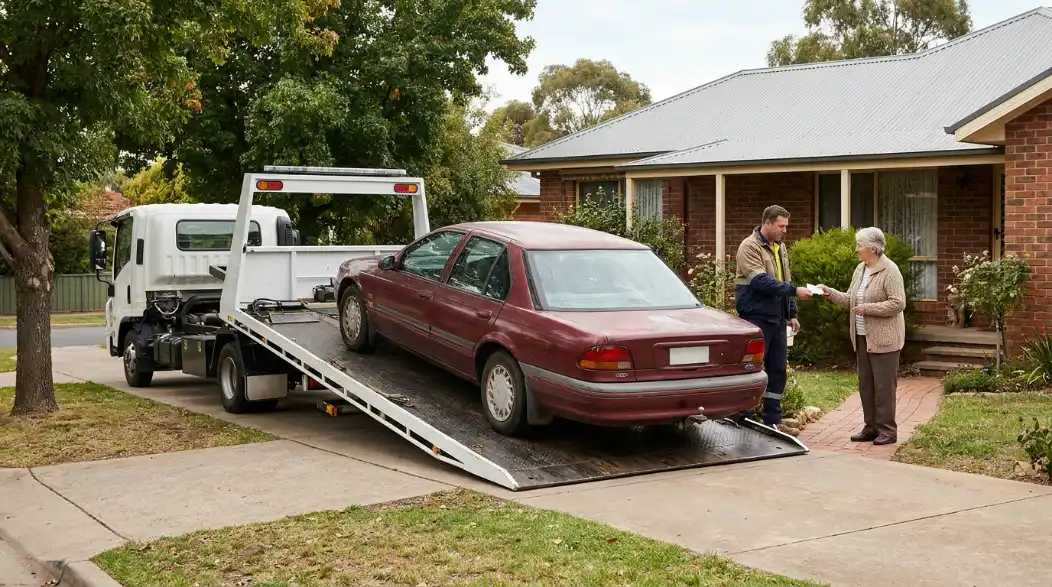
Cash for cars is a service where a licensed buyer purchases your vehicle directly, usually after a phone valuation, collects it and pays you on the spot by cash or instant bank transfer. It differs from a trade-in, where a dealer sets a price against a new purchase, and from a private sale, where you find the buyer yourself.
Cash-for-cars buyers take cars that are running, non-running, unregistered, accident-damaged or simply unwanted, and towing is normally included at no cost. In Melbourne & Bendigo that typically means one phone call, a quote within the hour and a pickup the same day.
How Much Is My Car Worth in Melbourne & Bendigo?
Nobody can honestly name an exact figure without the details, but these are the factors that decide it:
- Make, model and year. Popular utes, 4WDs and Japanese sedans hold their value because there's constant demand for their parts. A ten-year-old Hilux and a ten-year-old niche European hatch are very different propositions.
- Whether it runs. A car that starts and drives is valued as a vehicle. A non-runner is valued on its parts and metal.
- Weight and metal content. The shell of every car is worth money by weight as scrap steel, and scrap prices move with the global commodity market, so offers can shift from month to month.
- Salvageable parts. Working engines and gearboxes, straight panels, good wheels, alternators and electronics add value on top of scrap. That's why a car with a failed engine but a tidy body can out-quote a rusted shell.
- Accident damage. Statutory and repairable write-offs are assessed on what's still intact, not just on the damage.
- Registration and paperwork. Current rego and clear ownership papers speed things up. Unregistered cars are still bought, though the process differs slightly.
- Location and access. Every buyer builds towing into their price. A buyer already running trucks around Melbourne & Bendigo can usually offer more than one dispatching from elsewhere.
What Drives the Price: Quick Reference
| Your car | What mostly sets the price | Indicative outcome |
|---|---|---|
| Late-model ute, van or 4WD, running | Market demand, odometer, condition | Highest payouts, often several thousand dollars |
| Older sedan or hatch, running | Age, condition, parts demand | Mid-range, usually a few hundred to low thousands |
| Non-runner with intact body and parts | Salvageable parts plus metal | A few hundred dollars, more if the parts are good |
| Accident-damaged or written off | What's still undamaged | Varies widely, assessed case by case |
| Rusted shell, missing engine | Scrap metal weight | Lowest payouts, typically a couple of hundred dollars |
Give accurate details when you call. Quoting a "running" car that actually won't start is the quickest way to watch a price drop at your front gate.
Four Ways to Sell an Old Car in Melbourne & Bendigo
| Option | Speed | Effort | Price potential | Biggest risk |
|---|---|---|---|---|
| Private sale (Marketplace, Carsales) | Days to weeks | High: photos, enquiries, inspections | Highest for clean, roadworthy cars | No-shows, scams, roadworthy cost |
| Dealer trade-in | Same day | Low | Often lower, tied to buying another car | Price set to suit the dealer |
| Scrapyard (you tow it) | Same day | Medium to high | Weight-based only | Towing eats the payout |
| Cash for cars / wreckers | Same day | Low: one call | Fair for non-runners and older cars | Lowball quotes from unverified operators |
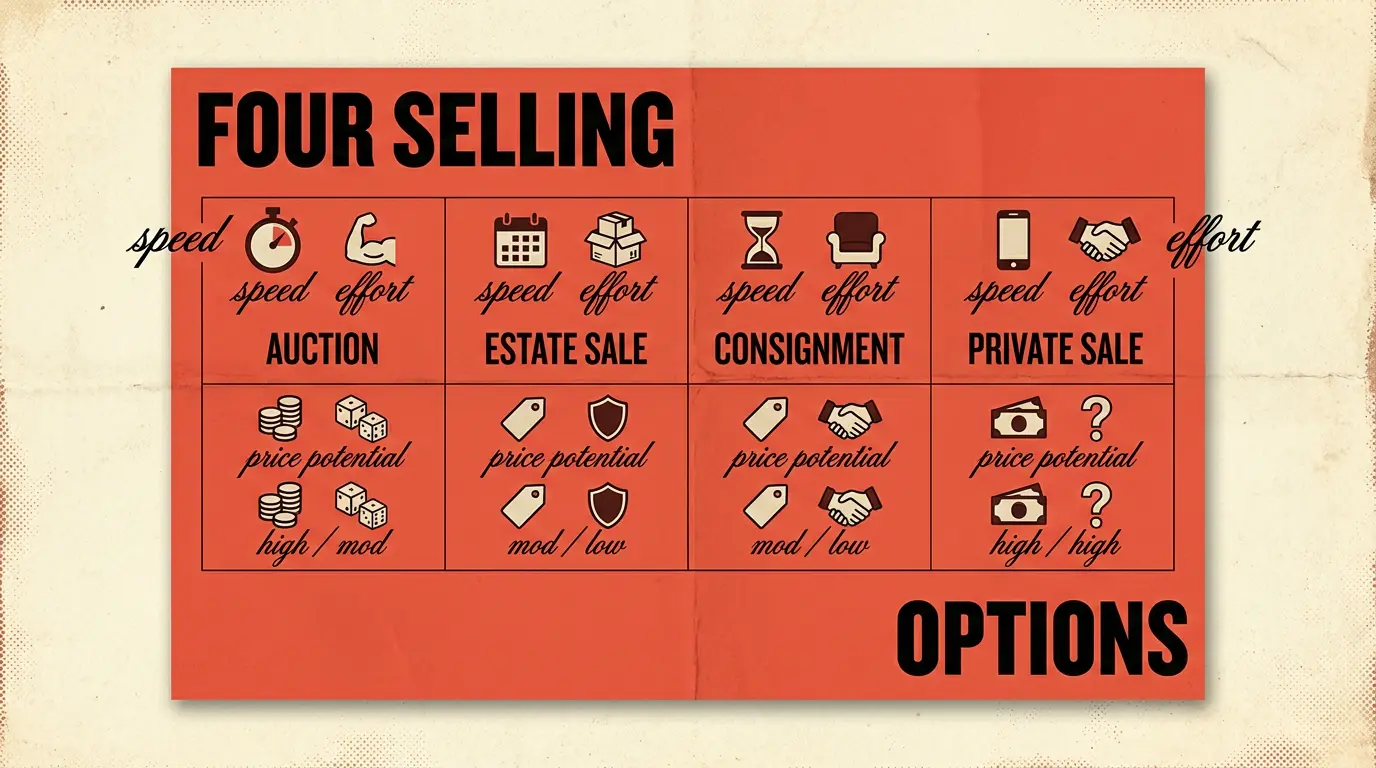
Which is right for you? If your car is a clean, registered, roadworthy runner worth a few thousand dollars and you've got the time, a private sale will usually return the most. If it's older, unregistered, damaged or just not worth the hassle, a direct buyer wins on time and certainty. Still-driveable cars suit a used car buyer, while mechanically finished or written-off cars suit auto wreckers, who pay for salvageable parts as well as metal.
What Paperwork Do I Need to Sell a Car in Victoria?
Rules can change, so always confirm the current requirements on the Transport Victoria website. Here is how the process generally works.
- Notify Transport Victoria within 14 days. When you sell a Victorian-registered vehicle, you need to let VicRoads know within 14 days. The simplest way is a notice of disposal through your myVicRoads account, after which the car is generally removed from your name within a couple of business days. Don't rely on the buyer to do it. Until it's lodged, tolls and fines can still land on you.
- Roadworthy certificate (RWC). A private sale of a registered vehicle in Victoria generally needs an RWC issued within the 30 days before the sale. Selling to a licensed motor car trader, or selling the car unregistered, is generally exempt, because the buyer takes on that responsibility. That's why most old and non-running cars never need one.
- Photo ID and proof of ownership. Have your driver's licence and, if you can find them, the registration papers ready. Missing papers aren't always a dealbreaker, so mention it when you call.
- A receipt or bill of sale. Keep a copy showing the date, time, price, buyer's details and odometer reading. This is your protection if anything is questioned later.
- Finance owing. If there's still money owing on the car, the lender has to be paid out as part of the sale. Tell the buyer upfront so it can be built into the process.
- Plates, tags and belongings. Remove toll tags and personal items, and ask Transport Victoria whether you're eligible for a refund on unused registration.
How to Sell Your Car for Cash in Melbourne & Bendigo: Step by Step
- Gather the details. Make, model, year, odometer reading, condition, registration status and a few clear photos.
- Get two or three quotes. Describe the car identically each time so you're comparing like for like, and ask whether the price is guaranteed on arrival.
- Check the buyer. Confirm they're a licensed motor car trader with public liability insurance and that they'll provide a written receipt.
- Book the pickup. Same-day collection is common around Melbourne & Bendigo, and a good buyer works around your schedule.
- Hand over only against payment. Photo ID is checked, payment clears, and only then does the car get loaded.
- Close it out. Lodge your notice of disposal with Transport Victoria within 14 days, then cancel your insurance and remove any toll tags.
Which Melbourne & Bendigo Suburbs Do We Collect From?
Our trucks work out of Melbourne & Bendigo, so the closer you are, the faster we arrive. Each suburb page covers local access, response times and the jobs we see most in that area:
- Golden Square: older streets and tight carports around the shopping strip
- Kangaroo Flat: a busy southern suburb with plenty of breakdown call-outs
- Eaglehawk: larger blocks, older sheds and long-parked cars
- Kennington: family homes near the reservoir and newer estates
- Epsom: a busy northern crossing point with regular accident recovery
- Strathfieldsaye: acreage and rural-residential blocks
- White Hills: established streets near the Botanic Gardens
- Long Gully: narrow, hilly goldfields-era streets
- Strathdale: leafy streets near La Trobe University's Bendigo campus
- California Gully: the quieter northern edge near bushland
Not on the list? Call anyway. Our regular run passes through most surrounding areas, and the full list lives on our Melbourne & Bendigo suburbs page.
How Do I Avoid Lowball Offers and Scams?
Most problems come from a handful of repeat tricks, and they're easy to sidestep once you know them.
- Compare like for like. Give every buyer the same honest description.
- Ask if the quote is guaranteed. Some operators quote high on the phone, then knock the price down at your front gate.
- Confirm towing is genuinely free. Nothing should be deducted for the truck.
- Check the credentials. Licensed motor car trader, public liability insurance, written receipt.
- Never pay anything upfront. A legitimate buyer pays you, not the other way around.
- Wait for cleared funds. Fake bank-transfer screenshots are a known trick. Don't let the car be loaded until the money is actually in your account or in your hand.
What Happens to Your Car After You Sell It?
A properly handled vehicle doesn't just get dumped. Fluids such as oil, coolant, brake fluid and fuel are drained first so nothing leaks into the ground. Usable parts are removed, tested and resold to local mechanics and panel shops. The remaining shell is crushed and recycled through licensed facilities, so up to 98% of the vehicle avoids landfill. For Melbourne & Bendigo, that means old cars aren't rusting in paddocks and leaching into local soil and waterways.